Free shipping on orders over $100

The Hidden Psychology of Touch: How Your Brain and Skin Work Together
7/15/20265 min read
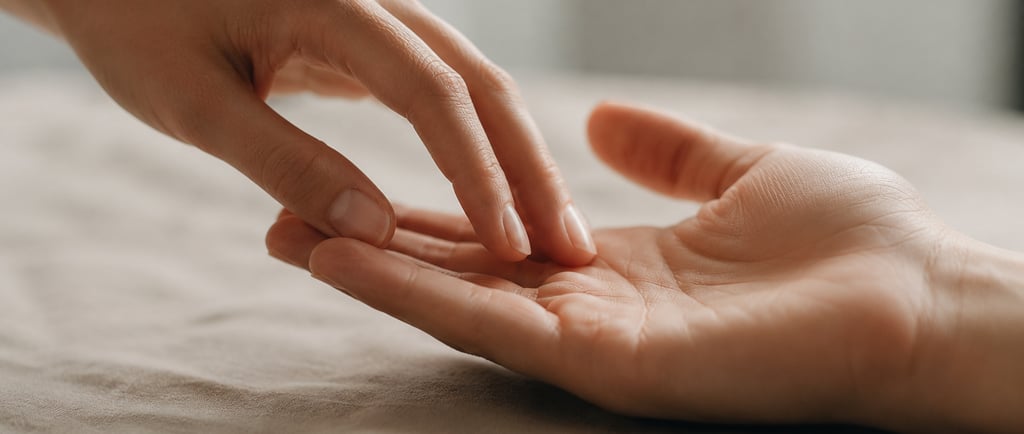

The Hidden Psychology of Touch: How Your Brain and Skin Work Together
Touch is often considered the most immediate of our senses. Long before we learn to speak, our brains are already using touch to explore the world, recognize familiar objects, and build emotional connections.
The psychology of touch is a fascinating field that combines neuroscience, biology, psychology, and sensory science. Researchers have discovered that touch influences how we perceive comfort, quality, trust, safety, and even beauty.
From the smooth surface of polished glass to the softness of silicone or the cool feel of stainless steel, every material creates a unique sensory experience that your brain processes almost instantly.
Understanding how touch works helps explain why certain materials feel more satisfying than others—and why humans naturally seek tactile experiences throughout their lives.
Touch Begins in the Skin
Although we often think of touch as something that happens in the hands, the process actually begins inside the skin.
Human skin is the body's largest organ and contains millions of specialized sensory receptors that constantly collect information about the environment.
These receptors detect:
Pressure
Vibration
Texture
Stretch
Temperature
Movement
Pain
Each receptor specializes in detecting a different type of sensation before sending electrical signals through the nervous system to the brain.
This process happens incredibly quickly, often within milliseconds.
Meet Your Mechanoreceptors
The skin contains several specialized receptors known as mechanoreceptors.
Each performs a unique role.
Merkel Cells
Merkel cells respond to sustained pressure and fine details.
They help us distinguish:
Smooth versus rough textures
Edges
Shapes
Small surface details
They are especially important when exploring objects with our fingertips.
Meissner Corpuscles
These receptors detect:
Gentle touch
Light movement
Low-frequency vibration
They allow us to notice when something softly brushes across the skin.
Pacinian Corpuscles
These receptors respond to:
Deep pressure
High-frequency vibration
They are among the fastest mechanoreceptors in the body and help detect subtle vibrations transmitted through objects.
Ruffini Endings
Ruffini endings detect:
Skin stretch
Finger position
Hand movement
They help the brain understand how the hand interacts with objects during everyday activities.
Together, these receptors provide an incredibly detailed picture of everything we touch.
How the Brain Interprets Touch
Touch does not end at the skin.
Once receptors detect a sensation, nerve signals travel through the spinal cord to the brain.
The primary somatosensory cortex, located in the parietal lobe, creates a detailed map of the body and processes tactile information.
This allows the brain to determine:
Where the object is touching the body
How much pressure is being applied
Whether the surface is smooth or textured
Whether it feels warm or cool
Whether movement is occurring
Remarkably, different parts of the body occupy different amounts of space within this sensory map.
The fingertips and lips receive much larger representations because they contain extremely high concentrations of sensory receptors.
Why Smooth Materials Feel Satisfying
Many people naturally prefer smooth materials.
There are several scientific reasons why.
Smooth surfaces create predictable friction between the skin and the object, allowing mechanoreceptors to process information efficiently.
Materials such as:
Borosilicate glass
Polished stainless steel
High-quality silicone
Finished hardwood
produce consistent tactile feedback that many people perceive as refined or premium.
Research suggests that smoother surfaces are often associated with:
Higher quality
Better craftsmanship
Cleanliness
Precision manufacturing
This helps explain why polished materials are frequently used in luxury products, architecture, and industrial design.
Temperature Changes Our Perception
Touch is closely linked with temperature.
Thermoreceptors in the skin detect changes in heat and cold almost immediately.
Different materials conduct heat differently.
For example:
Glass
Borosilicate glass often feels cool because it efficiently transfers heat away from the skin.
Stainless Steel
Metal conducts heat even faster, producing an even cooler initial sensation.
Silicone
Silicone conducts heat much more slowly and often feels warmer or softer when first touched.
These differences are not caused by the material having different temperatures but by how quickly each material transfers heat between itself and your skin.
Touch and Emotion
Touch is more than a mechanical process.
The nervous system also connects touch with emotional processing.
Gentle, non-threatening tactile experiences can activate brain regions involved in:
Comfort
Relaxation
Social bonding
Emotional regulation
Scientists have identified specialized nerve fibers known as C-tactile afferents that respond particularly well to slow, gentle touch.
These fibers communicate with areas of the brain involved in emotion rather than simply identifying physical contact.
This may help explain why comforting touch can reduce stress and promote feelings of well-being.
Why Texture Influences First Impressions
Humans rapidly form opinions about objects based on touch.
Studies in consumer psychology show that texture influences perceptions of:
Product quality
Durability
Luxury
Reliability
Craftsmanship
This phenomenon is known as haptic perception.
The brain combines tactile information with visual information to create an overall impression of an object.
Even before consciously evaluating a product, the nervous system has already begun forming opinions based on sensory input.
The Connection Between Touch and Memory
Touch also plays a role in memory formation.
The hippocampus, a brain region involved in memory, works closely with sensory processing systems.
Certain textures can trigger vivid memories years later.
Examples include:
Tree bark
Ocean sand
Smooth river stones
Soft fabric
Cool glass
These sensory experiences become linked with places, emotions, and significant life events.
This is one reason why tactile experiences often feel deeply personal.
Touch Shapes Everyday Life
Although we rarely think about it, touch influences thousands of daily decisions.
It affects how we:
Choose products
Appreciate craftsmanship
Interact with technology
Experience nature
Judge quality
Form first impressions
Understanding the psychology of touch reveals that every material tells a story through its texture, temperature, and physical properties.
The human brain has evolved to interpret these signals with remarkable speed and precision.
Final Thoughts
The psychology of touch demonstrates that our sense of touch is far more sophisticated than simply detecting pressure. Millions of specialized receptors, complex neural pathways, and emotional processing centers work together to create rich sensory experiences every moment of the day.
Whether exploring natural materials, appreciating thoughtful design, or learning about material science, touch remains one of the most powerful ways humans experience the world.
At Pink BlueJay, we believe understanding the science behind materials helps us appreciate thoughtful design, craftsmanship, and the remarkable biology that shapes every interaction with the objects around us. Through educational articles grounded in research, we hope to inspire curiosity about psychology, neuroscience, and the fascinating science of human perception.
Frequently Asked Questions
What is the psychology of touch?
The psychology of touch is the study of how physical contact influences perception, emotion, cognition, and behavior. It combines neuroscience, psychology, biology, and sensory science to understand how humans experience touch.
Why do smooth materials feel better?
Smooth materials create consistent tactile feedback that is efficiently processed by specialized receptors in the skin. Research suggests people often associate smooth surfaces with cleanliness, quality, and precision.
What are mechanoreceptors?
Mechanoreceptors are specialized sensory cells located in the skin that detect pressure, vibration, movement, and texture before sending signals to the brain.
How does touch affect the brain?
Touch activates the somatosensory cortex for physical sensation and can also engage emotional brain regions involved in comfort, memory, and social bonding, particularly through specialized C-tactile nerve fibers.
Why is touch important?
Touch helps humans interact safely with the environment, recognize objects, develop social bonds, regulate emotions, and evaluate the quality of materials and products.
References
McGlone, F., Wessberg, J., & Olausson, H. (2014). Discriminative and Affective Touch: Sensing and Feeling. Neuron.
Abraira, V. E., & Ginty, D. D. (2013). The Sensory Neurons of Touch. Neuron.
Lederman, S. J., & Klatzky, R. L. (2009). Haptic Perception: A Tutorial. Attention, Perception, & Psychophysics.
Purves, D., et al. Neuroscience (Oxford University Press).
National Institute of Neurological Disorders and Stroke (NINDS). Brain Basics: Know Your Brain.
Harvard Medical School. The Science of Touch and Human Sensory Perception
© 2025. All rights reserved.
Discover premium adult pleasure products from Vancouver Island.